Your air conditioner is running but your home still feels warm? This is frustrating, especially on a hot day. If you are often wondering why your AC is not cooling, the answer could be something simple, like a dirty filter or an incorrect thermostat setting. It could also be a sign that your system needs professional attention.
Below are 10 of the most common reasons for an AC not cooling, along with a few fixes you can safely try at home.
- Your Thermostat Is Set Incorrectly
Start with the basics: double-check that your thermostat is set to ‘Cool’ rather than ‘Heat’ or ‘Fan.’ If it’s on ‘Fan,’ just the blower might be running, which won’t actually cool things down. Also lower the temperature a few degrees below the room temperature to see if that kicks things into gear.
What You Can Do:
- Set the thermostat to Cool
- Lower the temperature by three to five degrees
- Replace the thermostat batteries if needed
- Make sure the display is working normally
If the thermostat does not respond or the temperature reading seems wrong, it may need repair or replacement.
- Dirty Air Filter
Think of your air filter like your AC’s lungs. When it gets clogged with dust, your system has to work way harder just to breathe. This lack of airflow means your home won’t get as cool as it should, and in some cases, it can actually cause the indoor coils to freeze up. If your vents are blowing warm air, a dirty filter is often the first thing to check.
What You Can Do:
Remove the filter and hold it up to a light. If you can barely see through it, replace it. Most filters should be checked every one to three months, although homes with pets, allergies, or heavy AC use may need more frequent changes.
- Closed/Blocked Air Vents
Furniture, curtains, rugs, and boxes can block supply or return vents. Closed vents can also reduce airflow and create uneven temperatures throughout the home.
What You Can Do:
Walk through your home and check every vent
- Open closed supply vents
- Move furniture away from registers
- Remove anything blocking return vents
- Vacuum visible dust from the vent covers
If only one room feels warm, the problem may be related to airflow or ductwork rather than the AC unit itself.
- Dirty Outdoor Unit
Think of your outdoor unit as the exhaust for your home’s heat. If it’s buried under leaves, grass clippings, or general garden debris, it can’t breathe properly, making it much harder to keep your house cool.
What You Can Do:
Take a walk outside and clear any leaves, weeds, or clutter away from the unit. Ideally, give it about two feet of breathing room on all sides. Just be careful—stick to clearing the area around it, and don’t try to open the equipment or spray water inside the electrical parts. If the metal coils themselves look really dirty, it’s best to call a pro to clean them safely.
- Tripped Circuit Breaker
Your HVAC system usually has separate electrical connections for the indoor and outdoor equipment. It is possible for the indoor blower to keep running while the outdoor unit loses power. This can make it seem as if the AC is operating, even though the cooling process has stopped.
What You Can Do:
Check your electrical panel for a tripped breaker. Reset it once by moving it fully to Off and then back to On. If it trips again, do not keep resetting it. Repeatedly tripping breakers can point to an electrical problem that needs professional repair.
- Frozen Evaporator Coil
Think of your AC coil like a radiator in reverse. It needs good airflow to work and if it gets too cold, ice can actually build up on it, which stops it from cooling your home. This usually happens because of things like a dirty air filter, blocked vents, or even a refrigerant leak. You might spot ice on the pipes, notice weak airflow, or see water pooling near your indoor unit.
What You Can Do:
Turn the AC off and switch the thermostat fan to On. This may help the coil thaw. Do not chip or scrape the ice. Once the ice is gone, replace the filter and try the system again. If it freezes a second time, call an HVAC technician. The underlying problem still needs to be found.
- Your System Is Low on Refrigerant
Refrigerant is what allows your AC to absorb and transfer heat. It does not normally get used up. If the level is low, there is usually a leak somewhere in the system.
Signs of low refrigerant may include:
- Warm air from the vents
- Ice on the refrigerant lines
- Long cooling cycles
- Hissing or bubbling sounds
- Higher energy bills
- A home that never reaches the thermostat setting
What You Can Do:
Refrigerant issues are not a do-it-yourself repair. A licensed technician needs to locate the leak, explain the repair options, and recharge the system correctly if appropriate.
- Your Ductwork Is Leaking
Your AC may be producing cool air, but damaged ductwork can allow that air to escape before it reaches your rooms. Duct leaks are especially common in attics, crawl spaces, garages, and other unconditioned areas. Possible signs include weak airflow from certain vents, excessive dust, higher utility bills or whistling sounds near ductwork.
What You Can Do:
Check any visible ducts for disconnected sections or obvious damage. HVAC-approved sealing materials and professional repairs are usually needed for lasting results.
- Your AC Is Too Small for the Home
An undersized system may run for hours without reaching the desired temperature. This can happen when the wrong equipment size was installed or when the home has changed. Additions, converted garages, large windows, poor insulation, and other factors can increase the cooling load.
What You Can Do:
A technician can evaluate the system size, home layout, insulation, windows, and other conditions. Do not assume a larger unit is automatically better. An oversized system can create its own comfort and humidity problems. Proper sizing matters more than simply buying the biggest AC available.
- A Major Component Is Failing
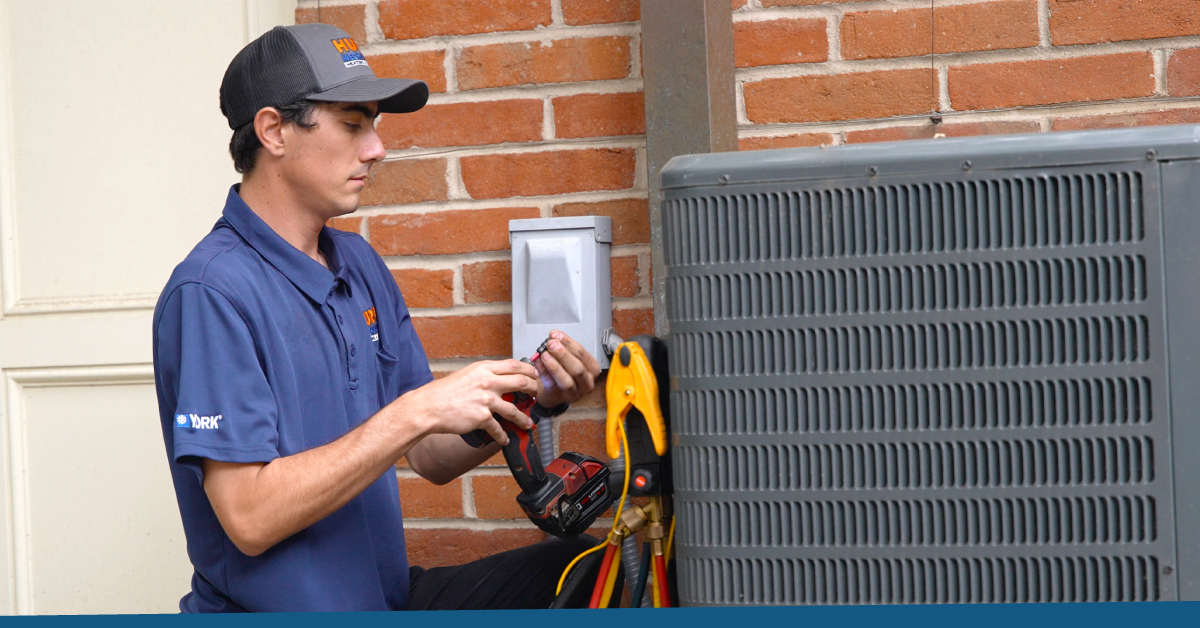
Sometimes the problem is inside the equipment. A faulty capacitor, blower motor, compressor, contactor, control board, or other part can stop the system from cooling properly.
These problems may cause:
- Clicking or buzzing sounds
- Frequent starting and stopping
- Weak airflow
- Warm air
- A silent outdoor unit
- Burning smells
- Complete loss of cooling
What You Can Do:
Turn the system off if you notice burning smells, loud mechanical noises, or repeated breaker trips. Internal HVAC repairs involve electricity, moving parts, and pressurized refrigerant. They should be handled by a trained professional.
What Should You Check Before Calling for AC Repair?
Before searching for AC repair near me, try this quick checklist:
| What to check | What to do |
|---|---|
| Thermostat | Set it to Cool and lower the temperature |
| Air filter | Replace it if it looks dirty |
| Vents | Open them and remove blockages |
| Outdoor unit | Clear leaves and debris around it |
| Breaker | Reset a tripped breaker once |
| Ice | Turn off cooling and let the coil thaw |
If the AC still does not cool after these checks, it is time to schedule service.
Need Expert AC Service? Turn to Hurn
An AC not cooling does not always mean you need a new system, sometimes the fix is simple. Other times, the system needs a careful inspection to find the real cause.
Hurn Mechanical helps homeowners across San Diego County with AC repairs, maintenance, system evaluations, and new installations. Our team will inspect your equipment, explain what we find, and help you understand your options.
If your air conditioner is running but not cooling, contact Hurn Mechanical today to schedule service.
Frequently Asked Questions
My AC is running but blowing warm air, what to do?
Common causes include an incorrect thermostat setting, a dirty filter, a tripped breaker, low refrigerant, a dirty outdoor unit, or a problem with the compressor.
Should I turn my AC off if it is not cooling?
Yes, especially if you notice ice, burning smells, loud noises, leaking water, or a tripped breaker. Continuing to run a damaged system could make the problem worse.
Can a dirty air filter stop an AC from cooling?
Yes, a heavily clogged filter can reduce airflow, lower cooling performance, and sometimes cause the indoor coil to freeze.
Why is my AC not cooling below a certain temperature?
The system may be struggling because of extreme outdoor heat, poor insulation, dirty equipment, low refrigerant, duct leaks, improper sizing, or a mechanical problem.

